
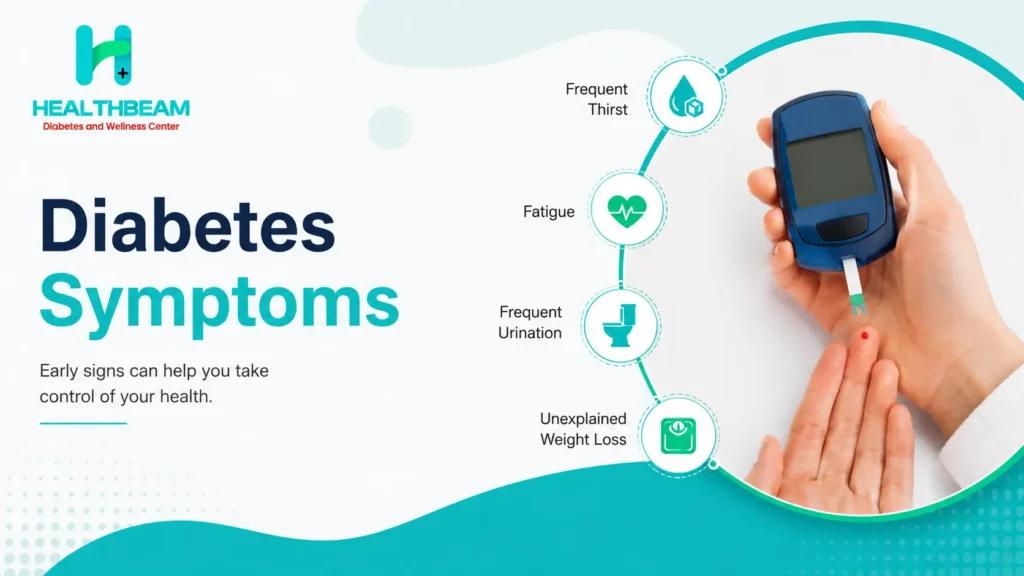
Your body sends warning signs before a diabetes diagnosis ever shows up on paper. Maybe you’re thirstier than usual. Maybe your vision blurs for a few seconds when you stand up too fast. None of that is random. It happens because your blood sugar climbs above a healthy range, and your body can’t quite keep pace anymore. Recognizing diabetes symptoms early protects you from complications you really don’t want to deal with later. Millions of people live with diabetes and don’t know it yet; that’s not an exaggeration- it’s just where the numbers land. Our team at Type 1 & Type 2 Diabetes Care works with patients from that first vague symptom all the way through long-term management. This guide walks through the common warning signs, what’s driving them, and when it’s time to actually pick up the phone. You’ll see how symptoms differ between type 1 and type 2, and honestly, the difference matters more than people think.
Diabetes symptoms can show up fast or creep in slowly, depending on the type. Type 1 often moves quickly, sometimes just a couple of weeks from “feeling fine” to “something’s wrong.” Type 2 usually takes its time, building over months, sometimes years. Your genetics, your daily habits, your overall health all of it factors in. Frequent urination. Unexplained weight loss. A cut that just won’t close up. Each one deserves a second look, not a shrug. By the end of this, you’ll know exactly what to watch for.
What Are the Early Signs of Diabetes?
Early signs often start small enough that you brush them off. Thirst that water doesn’t quite fix. Bathroom trips at 2 a.m. that become routine. Fatigue with no obvious cause: you slept eight hours and still feel like you didn’t. Our Type 1 & Type 2 Diabetes Care team hears these stories constantly from new patients, almost word for word sometimes. Vision can blur as sugar levels shift. Cuts heal slower. Weight moves in either direction without any real change in diet, which throws people off because they assume weight loss always means something’s working right. It doesn’t, not always. If two or more of these show up together, that’s worth a real conversation, not a Google search at midnight.
What Causes High Blood Sugar Symptoms?
High blood sugar happens when your body can’t use insulin the way it’s supposed to. Think of insulin as a key. It lets sugar into your cells so they can actually use it for fuel. When that key sticks, sugar backs up in your bloodstream instead of going where it’s needed. That backup is what causes most of the symptoms above. Genetics, diet, and how much you move during the day all play into it. So does stress, oddly enough, and bad sleep can bump your blood sugar even without touching your diet at all. Check out Healthbeam for a closer look at how personalized care actually targets these root causes instead of just treating the number on the meter. Medications and hormone shifts factor in too. Knowing the “why” behind your symptoms lets your care team build something that fits you, not a plan pulled off a shelf.
How Do Type 1 Diabetes Symptoms Appear?
Type 1 tends to hit hard and fast. Extreme thirst within days, not weeks. Rapid weight loss even without any change in eating habits that one throws people off every time. Nausea and stomach pain can follow as ketones build up. Kids and young adults get diagnosed most often, though honestly it can show up at any age, and we’ve seen it in patients well into their 40s. Our Prediabetes & Insulin Resistance Care program helps patients navigate these fast-moving symptoms once they show up. Fruity-smelling breath can point to ketoacidosis, a serious complication that needs urgent care, not a wait-and-see approach. Fast onset means fast action. Don’t sit on it.
What Are Common Type 2 Diabetes Warning Signs?
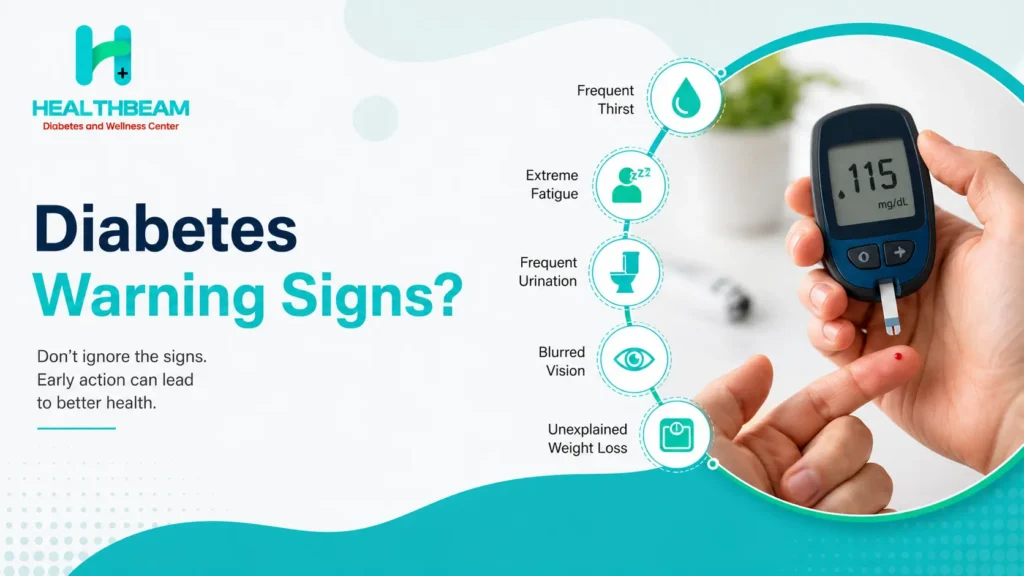
Type 2 builds slowly. That’s exactly what makes it dangerous — it’s easy to explain away.
- Tired even after a full night’s sleep
- Numbness or tingling in your hands or feet
- Dark, velvety patches of skin around your neck
- Infections that keep coming back, or sores that take forever to heal
These signs can sit unnoticed for years. Once you pass 35, or if diabetes runs in your family, regular checkups stop being optional. They become the thing that actually catches this early enough to matter.
How Does Blood Sugar Affect Your Energy Levels?
Blood sugar swings hit your energy hard. When your cells can’t grab glucose properly, they’re running on empty, plain and simple. Morning sluggishness, a crash an hour after lunch sound familiar? Spikes followed by sharp drops create a rollercoaster that messes with your mood and your focus at work. Balanced meals with fiber and protein smooth that curve out. Movement helps too; even a 15-minute walk after dinner does something measurable. Steady energy is usually a sign your blood sugar is under control. Track it for even a week and patterns tied to specific foods or habits start jumping out at you.
Can Diabetes Symptoms Appear Without Weight Loss?
Yes, and this trips a lot of people up. There’s this assumption that weight loss has to happen for it to “count.” It doesn’t. Type 2 diabetes often develops in people who are gaining weight, not losing it, right through diagnosis. Fatigue, frequent bathroom trips, blurry vision — none of that depends on what the scale says. Focusing only on weight delays diagnosis for a lot of patients, more than you’d think. Your symptoms are worth attention on their own. If something feels off, get it checked instead of waiting for a “textbook” sign to show up first.
When Should You See a Doctor About Diabetes Symptoms?
See a doctor once two or more symptoms show up consistently; don’t wait for a third or fourth to pile on. Waiting lets the damage continue quietly in the background. Sudden symptoms, like extreme thirst or fast breathing, need care right away. Gradual symptoms still deserve a scheduled visit, ideally within a few weeks, not months. Write down when things started and how often they happen. That kind of detail helps your provider narrow things down faster than you’d expect. Family history should push you toward earlier screening, even with no symptoms. Waiting rarely improves anything here.
How Is Diabetes Diagnosed After Symptoms Appear?
Diagnosis usually starts with a blood test. Your provider might run a fasting glucose test or an A1C, which shows your average blood sugar over roughly three months. Sometimes an oral glucose tolerance test adds more detail to the picture. According to the Centers for Disease Control and Prevention, early testing meaningfully improves outcomes for people at risk. Results steer your care team toward the right path: lifestyle changes, medication, or a mix of both. Getting tested removes the guesswork. You get an actual starting point instead of a hunch.
Final Thoughts
You don’t have to guess your way through diabetes symptoms. Early recognition puts the power back in your hands, before complications get a chance to build. Every symptom matters, even the small, easy-to-dismiss ones. A specialist can help you interpret your body’s signals and turn them into a concrete plan. You deserve care that listens first. Waiting rarely helps; action almost always does. Noticed something off lately? Book your appointment with Healthbeam today and get real answers, with support that actually understands what you’re dealing with.
Frequently Asked Questions
What are the early signs of diabetes?
Common early signs include increased thirst, frequent urination, fatigue, blurred vision, and slow-healing cuts.
What causes diabetes symptoms?
Diabetes symptoms can occur when blood sugar stays too high because the body does not make or use insulin properly.
How do type 1 diabetes symptoms appear?
Type 1 diabetes symptoms often develop quickly and may include extreme thirst, frequent urination, rapid weight loss, nausea, and stomach pain.
What are common type 2 diabetes warning signs?
Type 2 diabetes warning signs may include fatigue, numbness or tingling, recurring infections, slow-healing sores, and skin changes.
When should you see a doctor about diabetes symptoms?
You should see a doctor if symptoms continue or occur together, especially if you have a family history or risk factors for diabetes.