
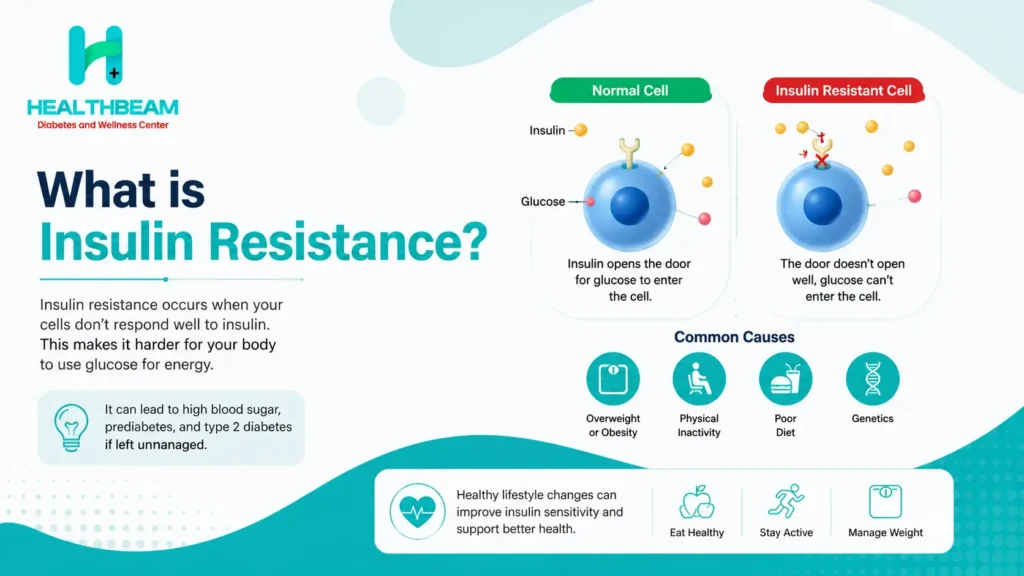
Insulin resistance happens when your cells basically stop listening to insulin, the hormone that’s supposed to keep your blood sugar in check. No symptoms at first. That’s the tricky part. Your pancreas works overtime, cranking out more and more insulin just to keep things stable. Eventually that strain adds up, and it can tip into prediabetes or type 2 diabetes if nobody catches it. Our Prediabetes & Insulin Resistance Care program helps patients catch this early and, in a lot of cases, actually reverse it. Insulin resistance isn’t a life sentence. Plenty of people improve their sensitivity through targeted changes, and it doesn’t always take years.
What Is Insulin Resistance in Simple Terms?
Imagine insulin as a key attempting to turn the lock that will allow glucose or sugar to pass through the cells. If the body’s cells become insulin resistant, the lock gets a bit worn and stiff, and it is harder to turn. As a result, sugars are not entering the cells as normal, and therefore, they remain in the bloodstream with even more pronounced sugar levels. To make up for that, the pancreas is going to secrete more insulin than what is normally considered healthy.
These types of Prediabetes & Insulin Resistance Care experts often explain this by drawing diagrams on your first appointment, with a whiteboard commonly used. Eventually, this increased workload takes a toll on insulin-producing cells as well. Insulin resistance may develop gradually over years, and at times it may be difficult to notice. In other words, very limited to none are the warning signs along the way.
What Are the Symptoms of Insulin Resistance?
Subtle. That’s the word that comes up again and again with insulin resistance symptoms.
- Hunger that hits shortly after a full meal
- Fatigue, especially after carb-heavy dishes
- Dark, velvety skin around the neck or armpits
- Weight gain that settles around your midsection
They don’t always show up together. Tracking changes over time, even loosely, helps you spot patterns before they turn into something bigger.
What Causes Insulin Resistance to Develop?
A mix of lifestyle and genetics, mostly. Extra body fat around your abdomen raises resistance more than fat elsewhere does; that’s one of those details people don’t expect. Inactivity means your muscles use glucose less efficiently. Bad sleep messes with hormone balance, insulin included. Chronic stress raises cortisol, and cortisol interferes with how insulin functions day to day. Family history plays in too. Certain medications and conditions like polycystic ovary syndrome contribute as well. Knowing your specific risk factors lets your care team build something that actually addresses your causes, not a generic checklist.
How Does Insulin Resistance Lead to Prediabetes?
Insulin resistance is often the first domino. As cells resist insulin more, blood sugar climbs a little higher, then a little higher still. Your pancreas keeps compensating, pumping out extra insulin to cover the gap. Eventually, that compensation just can’t keep up anymore, and blood sugar rises past what’s considered normal. That stage gets classified as prediabetes a warning shot before full type 2 diabetes. Here’s the good part: prediabetes is often reversible with early action. Catching that transition early gives you the best shot at stopping the slide toward a full diagnosis.
Can Insulin Resistance Be Reversed Naturally?
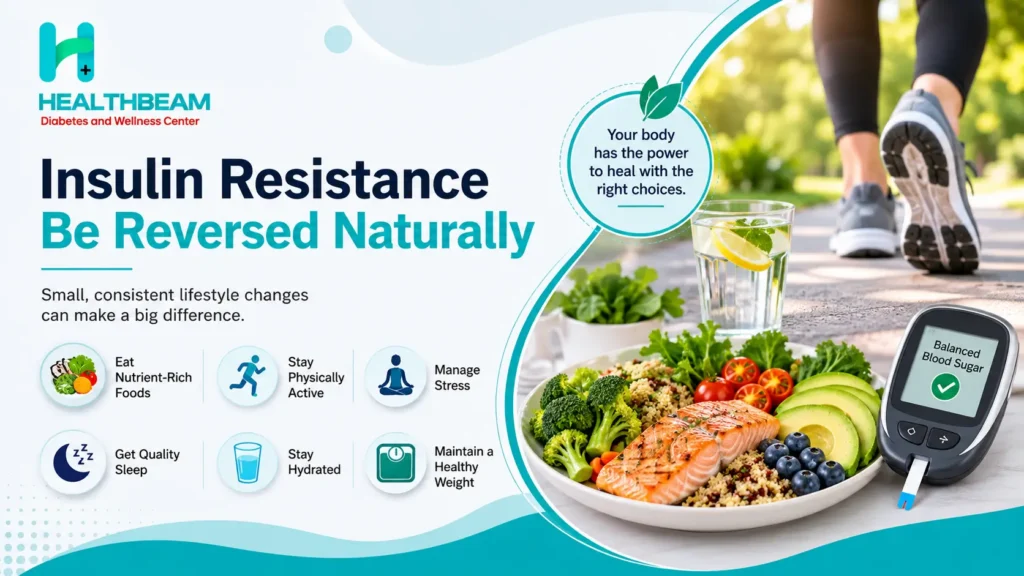
Most of the time, yes. Daily motion helps your muscles to absorb glucose more effectively. Among all, weight training definitely shows very good results as far as insulin sensitivity is concerned. Less consumption of factory-made carbohydrates and added sugar is also helpful in maintaining insulin control. Lack of sleep probably plays a bigger role than one usually thinks in insulin production, as there are multiple hormones connected with this process which are regulated mostly by our sleeping patterns. Losing even a few pounds, say 10 or 15 lbs., would make a big difference in the level of insulin resistance. Please visit HealthBeam, where you can see the strategies that take into account your actual life circumstances as an individual rather than just some general template. In this case, consistency is the king that even perfection bows down to.
How Is Insulin Resistance Diagnosed?
Diagnosis usually starts with blood tests measuring fasting glucose and insulin levels together. Your provider might calculate a ratio between the two to gauge resistance. An A1C test shows your average blood sugar over recent months. Sometimes cholesterol and triglyceride levels get checked too, since they often correlate with insulin resistance in ways researchers are still mapping out. Waist circumference gets measured during physical exams as another indicator. No single test confirms this on its own; your care team pieces together the full picture before landing on a diagnosis.
What Foods Help Improve Insulin Sensitivity?
Fiber-rich vegetables slow sugar absorption. Lean proteins stabilize blood sugar throughout the day. Healthy fats, think nuts and olive oil, support metabolic health in a broader sense. Whole grains, eaten in moderation, give you steadier energy than refined carbs ever will. Cinnamon shows modest benefits in a handful of studies, though don’t expect miracles from your spice rack. No single food fixes insulin resistance by itself. A consistent, balanced eating pattern makes the real difference over months, not days.
Why Does Early Treatment for Insulin Resistance Matter?
Getting treatment early significantly increases your chance of preventing diabetes. The National Institute of Diabetes and Digestive and Kidney Diseases reports that even making slight lifestyle changes during the pre-diabetes phase will result in a lower possibility of diabetes development. The longer someone avoids diagnosis, the more complicated and more dependent on medicines the treatment becomes. Getting your life in order not only helps your blood Sugar control, but it also keeps your heart and kidneys healthy. Making small changes now beats the need for major interventions later; that sums up the whole point in one sentence.
Final Thoughts
Knowing what insulin resistance is puts you ahead of it. It develops quietly, but that doesn’t mean it gets to run the show. With the right support, insulin sensitivity improves, and diabetes risk drops. Small changes add up faster than people expect. You deserve a care team that explains your results in plain language, not medical jargon. This is manageable. You don’t have to figure it out solo. Contact Healthbeam today for a free consultation and start building a plan around your actual blood sugar picture.
Frequently Asked Questions
What is insulin resistance?
Insulin resistance occurs when your cells do not respond well to insulin, making it harder to control blood sugar.
What are common insulin resistance symptoms?
Symptoms may include increased hunger, fatigue, weight gain around the waist, and dark, velvety skin patches.
What causes insulin resistance?
Common causes include inactivity, excess abdominal weight, poor sleep, chronic stress, genetics, and certain health conditions.
Can insulin resistance lead to prediabetes?
Yes. When insulin resistance worsens, blood sugar can rise and eventually reach the range associated with prediabetes.
Can insulin resistance be reversed?
Often, it can be improved through regular physical activity, balanced nutrition, better sleep, weight management, and appropriate medical care.