
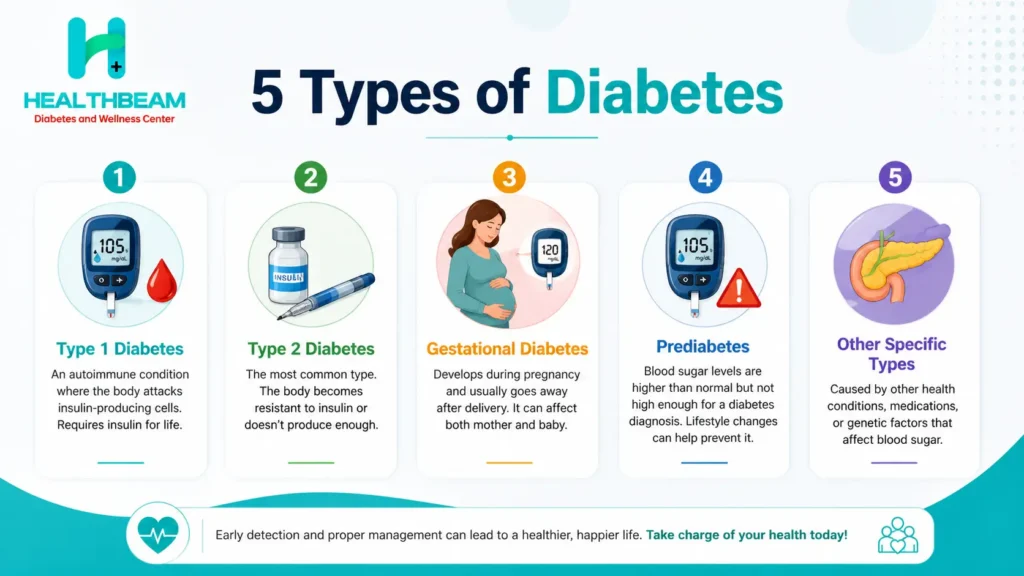
Diabetes isn’t just one condition wearing different masks. You probably already know type 1 and type 2. Three more types exist, and most people have never heard of a couple of them. Each comes with its own causes, symptoms, and treatment path. Knowing exactly which type you’re dealing with or which one a family member has shapes everything about the care plan going forward. Our Type 1 & Type 2 Diabetes Care team helps patients pin down exactly where they fall. Confusion between types can delay treatment longer than people realize.
This article breaks down all 5 types of diabetes clearly, so you know what to watch for. You’ll learn about the autoimmune roots of type 1, the lifestyle threads running through type 2, and the pregnancy-driven shifts behind gestational diabetes. Prediabetes and a couple of rarer forms round things out, and they deserve more attention than they usually get. Every type shares one thing: early recognition matters, full stop. Your treatment depends heavily on getting the identification right from day one.
What Is Type 1 Diabetes?
Type 1 happens when your immune system turns on the insulin-producing cells in your pancreas. It can hit at any age, though childhood and young adulthood are common windows. Symptoms show up fast: extreme thirst, frequent bathroom trips, weight dropping off without trying. Insulin injections or a pump become necessary since the body’s own supply is gone. Our Type 1 & Type 2 Diabetes Care program builds personalized insulin plans around this. Genetics play some role, though the exact trigger is still murky in a lot of cases. Daily monitoring becomes part of life, not an occasional chore.
What Is Type 2 Diabetes?
Type 2 develops when your body resists insulin or just doesn’t make enough. It accounts for the vast majority of diabetes cases globally, something like 90 percent, depending on the study you look at. Symptoms build slowly, often across years, which makes catching it early genuinely hard. Excess weight, inactivity, family history, and age all raise your risk. Treatment usually starts with diet and exercise changes before medication enters the picture. Insulin sometimes becomes necessary as things progress. Often preventable, often delayable — that’s the part worth remembering here.
What Is Gestational Diabetes?
Gestational diabetes shows up during pregnancy as hormones shift and affect insulin function. Pregnancy naturally makes the body more insulin resistant, which helps support fetal growth. For some women, that resistance goes too far, and blood sugar climbs. Testing usually happens between 24 and 28 weeks. Our Diabetes in Pregnancy Care program supports expecting mothers through screening and personalized management. Left unmanaged, it raises risks for mother and baby both. Blood sugar typically normalizes after delivery, though future diabetes risk goes up.
What Is Prediabetes?
Prediabetes means blood sugar sits higher than normal but not quite high enough to qualify as diabetes yet.
- Fasting blood sugar between 100 and 125 mg/dL
- A1C between 5.7 and 6.4 percent
- Reversible in many cases through weight loss and activity
- Often progresses to type 2 within a handful of years if left alone
No noticeable symptoms most of the time. Routine screening is really the only way to catch it, especially if risk factors are already in play.
What Are Rare Forms of Diabetes?
Beyond the familiar types, a few rarer forms exist and rarely get discussed. Monogenic diabetes comes from a single gene mutation and tends to run in families. Cystic fibrosis-related diabetes develops as a complication when the pancreas is affected. Secondary diabetes can result from other conditions, certain medications, or pancreatic damage from an unrelated illness. These forms often need specialized testing to diagnose correctly. Genetic testing can clear up a diagnosis when the standard type 1 or type 2 criteria don’t quite line up with your history.
How Do Symptoms Differ Across Diabetes Types?
Symptoms vary a lot depending on the type. Type 1 hits suddenly, sometimes within days. Type 2 creeps, sometimes going unnoticed for years at a stretch. Gestational diabetes often shows zero symptoms, which is exactly why pregnancy screening matters so much. Prediabetes rarely shows symptoms; blood tests are basically the only reliable flag. This is why testing sits at the center of diagnosis across every single type, not just the obvious ones.
How Is Each Type of Diabetes Treated?
Treatment shifts based on the type you’re dealing with. Type 1 always needs insulin therapy since the body’s supply is gone. Type 2 usually starts with lifestyle changes before medication or insulin comes into play. Gestational diabetes management centers on diet, monitoring, and sometimes insulin during pregnancy. Prediabetes treatment leans almost entirely on lifestyle shifts to head off progression. Visit Healthbeam to see how personalized plans handle each type differently, based on where you actually stand.
Can Diabetes Type Change Over Time?
Sometimes, yes. Gestational diabetes usually resolves after childbirth but raises future type 2 risk considerably. Prediabetes can slide into full type 2 without intervention. In rarer cases, adults first diagnosed with type 2 turn out to have a slow-developing form of type 1 instead. This reclassification usually surfaces when standard treatments just aren’t working the way they should. According to the American Diabetes Association, accurate diagnosis stays essential for effective long-term management no matter which type you’re managing.
Final Thoughts
Knowing which of the 5 types of diabetes affects you shapes every decision from here forward. Accurate diagnosis leads to accurate treatment. Accurate treatment leads to better outcomes it really is that direct a chain. You deserve a team willing to take the time to identify your type correctly, not guess and adjust later. Type 1, type 2, gestational, prediabetes, or something rarer, support exists either way. Reach out to Healthbeam today for a free consultation and get real clarity on your diagnosis and options.
Frequently Asked Questions
1. What are the 5 types of diabetes?
The five include type 1 diabetes, type 2 diabetes, gestational diabetes, prediabetes, and rare forms of diabetes.
2. What is type 1 diabetes?
Type 1 diabetes is an autoimmune condition where the body stops producing enough insulin.
3. What is type 2 diabetes?
Type 2 diabetes occurs when the body does not use insulin properly or does not produce enough insulin.
4. What is gestational diabetes?
Gestational diabetes develops during pregnancy when hormonal changes make it harder to control blood sugar.
5. What are rare forms of diabetes?
Rare forms include monogenic diabetes, cystic fibrosis-related diabetes, and diabetes caused by other conditions or medications.