
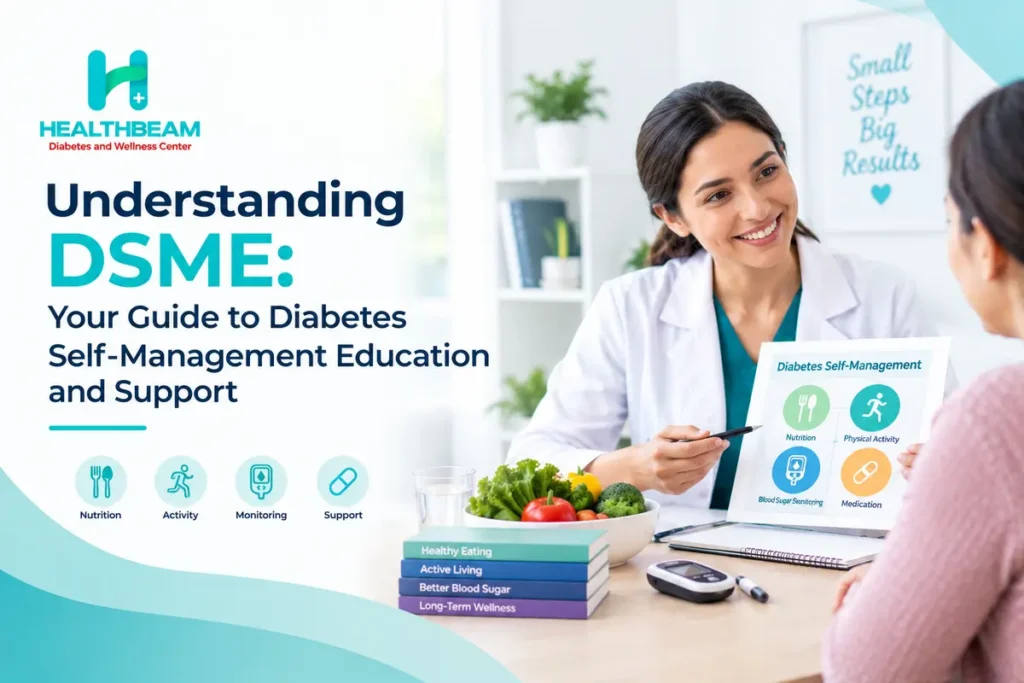
Diabetes Self-Management Education (DSME) is a step-by-step learning method designed to train people living with diabetes on how to handle the challenges of self-managing their diabetes, including blood sugar levels, medications, nutrition, and daily habits confidently, with the help and support of a certified diabetes educator. If you are a Greenbelt, MD resident seeking real, no-judgment diabetes support, then knowing how DSME functions could be your first milestone to having good long-term health conditions.
What Is DSME and Why Does It Matter?
Getting diagnosed with diabetes often means you get more questions than answers: “Can I still eat what I like?” “Does a needle mean I should use insulin all the time?” “Why does my sugar go up after I walk for a few minutes?” DSME, or sometimes known with the acronym diabetes self-management education and support (DSMES), is the answer to these precise questions. It is a form of guidance provided by a qualified educator that does not stop at a single class but develops in a way that patient and educator will work together through diagnosis, annual check-ups and major life changes.
The data supports the fact that patients’ HbA1c levels decrease, complications risks reduce and they end up in fewer emergency hospitalizations if education is structured well for diabetes. The reasons are not far to seek since people who are trained by a DIABETES self-management program understand not only what they have to do but also why they have to do it so they are able to maintain their medication regime much more readily.
What Happens During a DSME Program?
A diabetes education class at a learning center would generally include seven basic areas that influence one’s daily life living with diabetes:
- Eating sensibly making meal plans that suit your culture, budget, and the way your life goes
- Physical activity finding out how movement can be safely made without drastic sugar level changes
- Checking blood sugar levels selecting and properly using glucose meters and continuous glucose monitors
- Medications learning about insulin, oral medications, and timing
- Decision-making identifying and dealing effectively with high, low, and sick day sugars
- Minimizing dangers how to avoid the effects of eye, kidney, nerve, and heart complications in the future by taking measures now
- Coping in a positive way dealing with the chronic stress of the situation as well as the emotional impact
The lessons are usually in one-on-one settings or in small group formats and the classes are led by a certified diabetes educator (CDE) who may be a nurse, a dietitian, a pharmacist, etc., with specialized diabetic diabetes care training. At the Healthbeam Diabetes and Wellness Center, individual needs rather than generic approaches are taken care of every time, which is why each treatment plan is tailored according to the patient’s preferences and the patient’s lifestyle since no two patients manage diabetes in quite the same way.
Who Should Enroll in DSME?
Diabetes education isn’t solely aimed for newly diagnosed individuals. Usually, experts strongly suggest joining the Diabetes Self-Management Education (DSME) program at the four essential times below:
- Time of diagnosis
- Annually or if you consistently aren’t meeting your care goals
- At the moment when any complications or health changes occur
- On life’s major turning points like a new job, pregnancy, growing older, or changes in insurance or living situation
In other words, even if you have been effectively managing your diabetes for decades and there comes a moment when you still question, ‘what on earth do I actually count for carbs?’ ‘How on earth do I properly calculate an insulin dose for my child?’, or ‘what on earth am I supposed to learn from that reading of my CGM?’, that is actually a good time to go back for a short course from a certified teacher.
Is DSME Covered by Insurance?
Usually, a referral from a doctor, nurse practitioner, or a PA is needed to get DSME services, which are covered by Medicare and most insurance policies. You get the first hours for free when you are diagnosed and then you have additional hours each year. It is a good idea to check your insurance benefits in detail before the first appointment. A top-class diabetes education center will help you verify whether your plan covers the service, and also do the paperwork to make sure you are never turned away at the door just because you don’t have the money.
Finding Diabetes Education Near You in Greenbelt, MD
Typically, a search for “diabetes classes near me” or “diabetes education near me” will provide several hospital programs, general online courses, and community workshops, nevertheless, not all of those programs provide equally thorough, regular, and tailored support. Local, face-to-face DSME has a clear benefit: not only can an educator tailor your plan on a session-by-session basis, they also can communicate directly with your doctor, and take into consideration such factors as the local food selection, pharmacy distribution, and lifestyle elements specific to the community.
If you are a resident of Greenbelt and neighborhoods of Prince George’s County that surrounds it, the presence of a diabetes learning center very close to home will help you minimize your resistance to the consistency of follow-ups, which, according to research, remains the most critical factor for long-term success.

Take the Next Step With Healthbeam Diabetes and Wellness Center
Controlling diabetes is a major achievement that requires proper education and continuous support of your health care team. Healthbeam Diabetes and Wellness Center provides customized DSME programs by certified diabetes educators who are there for you, not only once, but at all the different stages of your diabetic life that you are passing through while working together with the health educators from the center.
To get rid of all those negative emotions about your diabetic condition and have a more relaxed, secure approach to your diabetes management, it would be great if you contact Healthbeam Diabetes and Wellness Center as soon as possible to get set-up with your initial appointment.
Frequently Asked Questions
1. What does DSME stand for?
DSME stands for Diabetes Self-Management Education, a structured program that teaches patients how to manage diabetes day to day. It’s often paired with ongoing support and referred to as DSMES.
2. How many DSME sessions does Medicare cover?
Medicare typically covers up to 10 hours of initial DSME within the first 12 months after diagnosis, plus 2 hours of follow-up education each year after, with a valid physician referral.
3. Do I need a doctor’s referral for diabetes education classes?
Yes, most insurance plans, including Medicare, require a referral from your doctor, nurse practitioner, or physician assistant before covering DSME services.
4. What’s the difference between a certified diabetes educator and a regular nurse?
A certified diabetes educator has completed additional specialized training and certification specifically in diabetes care, beyond standard nursing, dietetic, or pharmacy credentials.
5. Can DSME help even if I’ve had diabetes for years?
Yes. Guidelines recommend revisiting diabetes education annually or whenever care goals aren’t being met, since treatments, technology, and personal circumstances change over time.