
What you low glycemic index meal delivery eat every single day is one of the most powerful levers you have over your blood sugar — and low glycemic index eating is one of the most evidence-backed nutritional strategies for diabetes management. At Healthbeam Diabetes and Wellness Center in Greenbelt, MD, our registered dietitians and certified diabetes educators provide expert nutrition counseling that helps patients understand, adopt, and sustain a low glycemic index diet. Whether you’re managing Type 1, Type 2, gestational diabetes, or insulin resistance, our Nutrition Services and Comprehensive Diabetes Self-Management Education programs can transform how food works for your health — not against it.
What Is the Glycemic Index — and Why Does It Matter for Diabetes?
The Glycemic Index (GI) is a numerical scale from 0 to 100 that measures how quickly a carbohydrate-containing food raises blood glucose after eating. Foods with a high GI (70 and above) cause rapid blood sugar spikes, while low GI foods (55 and below) are digested more slowly, producing a gradual, steady rise in glucose.
For people with diabetes, this distinction is critical:
- High GI foods cause rapid glucose spikes that challenge insulin response
- Low GI foods promote slower glucose absorption, reducing post-meal blood sugar surges
- A consistent low GI diet improves HbA1c, reduces insulin resistance, and lowers cardiovascular risk
According to a comprehensive meta-analysis published by the American Diabetes Association (diabetes.org), low glycemic index diets significantly reduce HbA1c levels in people with Type 1 and Type 2 diabetes compared to conventional dietary advice.
The Diabetes & Metabolism journal (sciencedirect.com) reports that substituting just a few high-GI foods with low-GI alternatives daily can meaningfully improve fasting blood glucose and insulin sensitivity within 12 weeks.
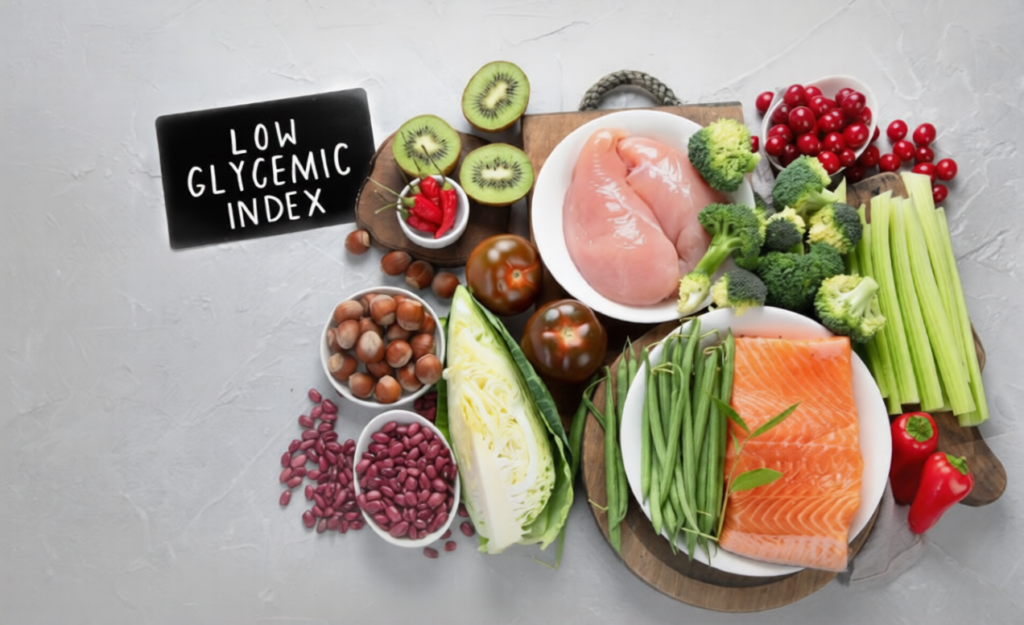
Low Glycemic Index Foods: Your Diabetes-Friendly Grocery List
Building a low GI diet starts with knowing which foods support stable blood sugar:
Low GI Foods to Embrace
- Non-starchy vegetables — broccoli, spinach, kale, zucchini, cauliflower
- Legumes — lentils, chickpeas, black beans, kidney beans
- Whole grains — barley, quinoa, bulgur, oats (steel-cut or rolled)
- Fruits — berries, apples, pears, peaches, cherries
- Proteins — eggs, chicken, fish, tofu, Greek yogurt
- Healthy fats — avocado, olive oil, nuts and seeds
- Dairy — unsweetened yogurt, milk (in moderation)
High GI Foods to Limit
- White bread, white rice, and regular pasta
- Sugary beverages — sodas, sweetened juices, energy drinks
- Processed breakfast cereals and instant oatmeal
- Potatoes (especially mashed or baked)
- Candy, sweets, pastries, and cakes
- Watermelon, pineapple, and overripe bananas in large portions
Low Glycemic Index Meal Delivery: What to Look For
For many patients — especially those managing diabetes alongside busy work, family, or health challenges — meal preparation is a significant barrier. Low glycemic index meal delivery services have emerged as a practical solution. When evaluating these services, our dietitians recommend looking for:
- Meals designed with certified diabetes educators or registered dietitians
- Full nutritional information including GI or glycemic load data
- High fiber content (aim for 25-38g of fiber daily)
- Controlled carbohydrate portions — generally 45-60g per meal for most adults with diabetes
- Low sodium options (under 600mg per meal is ideal)
- Variety to prevent dietary fatigue and support long-term adherence
At Healthbeam, our nutrition team can help you evaluate specific meal delivery services, create grocery lists, and build personalized meal plans that match your blood sugar goals — all backed by our Comprehensive Diabetes Self-Management Education curriculum.
How Healthbeam’s Nutrition Team Supports Low GI Eating
Our approach to diabetic nutrition counseling goes far beyond handing you a generic meal plan. We provide:
- 1-on-1 medical nutrition therapy with a registered dietitian
- Personalized low glycemic index meal planning based on your food preferences, cultural background, and health goals
- Continuous Glucose Monitoring (CGM) data interpretation to see exactly how specific foods affect your blood sugar
- Grocery shopping guidance and restaurant navigation tips
- Coordination with your Personalized Type 1 & Type 2 Diabetes Care team for integrated treatment
- Virtual nutrition consultations through our Telehealth Diabetes Appointments
- Special dietary guidance for patients managing Pregnancy & Gestational Diabetes Support
Combining Low GI Eating With Other Diabetes Strategies
Food is powerful — but it works best as part of a complete diabetes management strategy. At Healthbeam, we integrate nutritional therapy with your overall care plan:
- Optimized medication timing around meals to reduce post-meal glucose spikes
- Physical activity recommendations that complement low GI eating for improved insulin sensitivity
- Stress management strategies (stress hormones directly raise blood glucose)
- Sleep hygiene guidance — poor sleep disrupts insulin sensitivity
When low GI nutrition is woven into your broader Diabetes Medication Management and self-management education, the results are exponentially better than any single intervention alone.
People Also Ask About Low Glycemic Index Eating for Diabetes
Q: Is a low glycemic index diet effective for Type 2 diabetes?
A: Yes. Research consistently shows that low GI diets improve HbA1c, fasting blood glucose, and insulin sensitivity in people with Type 2 diabetes. It is recommended by the American Diabetes Association as a component of medical nutrition therapy.
Q: What is the best low GI food to lower blood sugar?
A: Legumes (lentils, chickpeas), non-starchy vegetables, berries, and whole grains like barley consistently rank among the best low GI foods for blood sugar management. Our dietitians at Healthbeam can build a personalized list based on your preferences.
Q: Can low GI eating replace diabetes medication?
A: In some early-stage Type 2 diabetes or insulin resistance cases, significant dietary changes can reduce or eliminate the need for medication — but this should always be done under medical supervision. Healthbeam’s integrated care team manages both nutrition and medication together.
Q: Are low glycemic index meal delivery services worth it for diabetics?
A: For patients who struggle with meal preparation or grocery planning, low GI meal delivery services can be a helpful tool — especially when selected with guidance from a diabetes dietitian. They ensure consistent carbohydrate control and portion management.
Q: How quickly does a low GI diet improve blood sugar?
A: Most patients see measurable improvements in post-meal blood glucose within the first 2 to 4 weeks of consistent low GI eating. HbA1c improvements typically become visible within 3 to 6 months.
Q: Does Healthbeam offer nutrition counseling as part of diabetes care?
A: Yes. Nutritional therapy is a core component of every care plan at Healthbeam. Our registered dietitians specialize in low glycemic index meal planning for diabetes, insulin resistance, and gestational diabetes patients.
Q: What is the difference between glycemic index and glycemic load?
A: Glycemic index measures how quickly a food raises blood sugar. Glycemic load factors in portion size, making it a more practical tool for meal planning. Our nutrition team teaches patients to use both metrics for optimal blood sugar management.
Eat Smarter. Control Your Diabetes. Live Better.
A low glycemic index approach to eating is one of the most sustainable, evidence-backed strategies for diabetes management — and Healthbeam’s expert nutrition team is here to guide every step. Whether you’re building meals from scratch, exploring meal delivery options, or simply trying to understand which foods serve your health, we’re here with personalized, compassionate support.
Visit our Contact Us page to book a nutrition consultation. Explore our full Services offering — from Insulin Resistance Treatment to Diabetes Complications Prevention — and take control of your health today.