
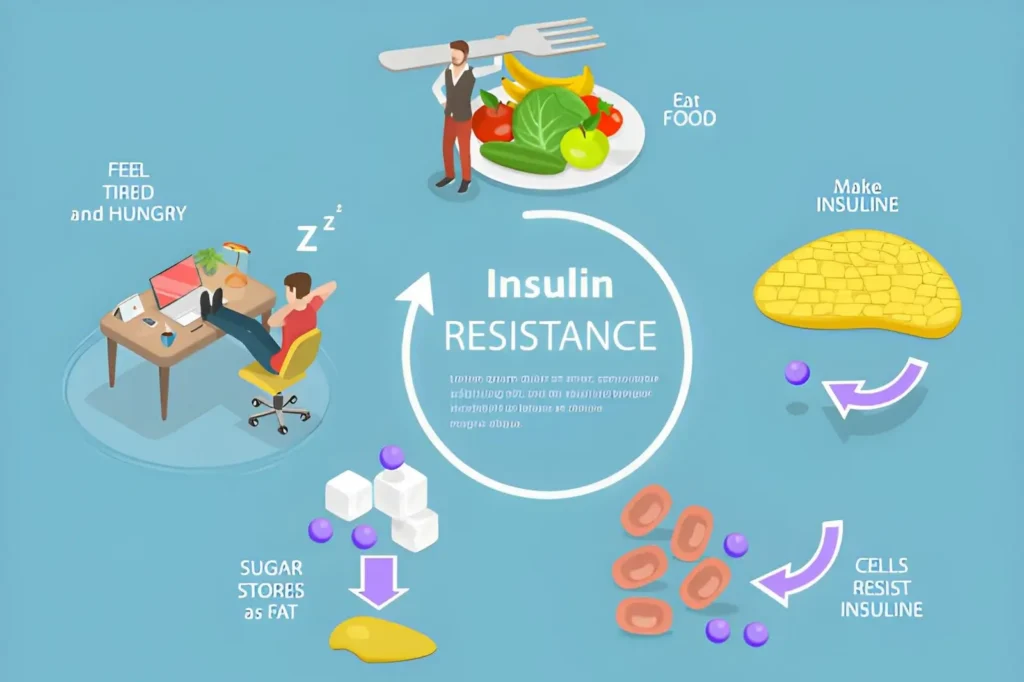
Many people experience insulin resistance symptoms without realizing their body is struggling to use insulin properly. Insulin is a hormone that helps move sugar from the bloodstream into the body’s cells for energy. When the body becomes resistant to insulin, blood sugar levels can rise, increasing the risk of serious health conditions. Understanding the warning signs early can help you take action before the condition becomes more severe.
How Insulin Resistance Develops in the Body
The development of insulin resistance symptoms starts when the body’s cells become less responsive to insulin. To compensate, the pancreas produces more insulin to keep blood sugar under control. Over time, this extra workload can make it harder for the body to regulate glucose effectively. This process often develops slowly, making it difficult to notice until symptoms become more obvious.
Early Signs of Insulin Resistance You Should Watch For
One of the earliest insulin resistance symptoms is increased hunger, especially after meals. Other warning signs may include fatigue, difficulty concentrating, and unexplained weight gain. These early signs of insulin resistance often appear gradually and may be mistaken for normal daily stress or tiredness. Paying attention to these changes can help prevent long-term complications.
Common Symptoms of Insulin Resistance
Several insulin resistance symptoms can affect daily life. Common signs include persistent fatigue, cravings for sugary foods, difficulty losing weight, and increased thirst. Some people may also notice dark patches of skin around the neck, underarms, or other body areas. Recognizing these symptoms early can encourage timely lifestyle changes and medical evaluation when necessary.

Causes of Insulin Resistance in Adults
Understanding insulin resistance symptoms also requires knowing what contributes to the condition. The causes of insulin resistance in adults often include excess body weight, lack of physical activity, poor dietary habits, chronic stress, and genetic factors. In some cases, hormonal disorders and certain medications may also increase the risk. Identifying these causes is an important step toward improving overall health.
How Insulin Resistance Affects Blood Sugar Levels
A major concern related to insulin resistance symptoms is their impact on glucose regulation. Insulin resistance and blood sugar levels are closely connected because ineffective insulin action allows glucose to remain in the bloodstream longer than normal. As blood sugar levels rise, the risk of developing prediabetes and type 2 diabetes increases. Monitoring blood sugar regularly can help detect problems before they become serious.
How to Reverse Insulin Resistance Naturally
Many people want to know how to reverse insulin resistance naturally. Fortunately, healthy lifestyle changes can significantly improve insulin sensitivity. Regular exercise, balanced meals, quality sleep, and stress management are all effective strategies. Reducing processed foods and increasing fiber intake may also support better metabolic health. Taking small, consistent steps can lead to meaningful improvements over time.
Another important aspect of managing insulin resistance symptoms is maintaining a healthy weight. Even modest weight loss can improve how the body responds to insulin. Combining physical activity with nutritious food choices often produces the best long-term results. Consistency is more important than perfection when working toward better health outcomes.
People experiencing insulin resistance symptoms should also focus on regular health checkups. Early detection allows healthcare professionals to recommend personalized treatment plans and monitor progress. Preventive care can help reduce the risk of future complications and support long-term wellness.
Conclusion
Recognizing insulin resistance symptoms early can make a significant difference in your overall health. From fatigue and weight gain to changes in blood sugar regulation, these warning signs should never be ignored. Understanding the causes, monitoring symptoms, and adopting healthier habits can help improve insulin sensitivity and reduce future health risks. If you have concerns about your symptoms or need professional guidance, visit our Contact Us.
Frequently Asked Questions
1. What are the first signs of insulin resistance?
Early symptoms include fatigue, increased hunger, weight gain, and difficulty concentrating throughout the day.
2. Can insulin resistance cause weight gain?
Yes, insulin resistance can increase fat storage and make losing excess weight difficult.
3. How does insulin resistance affect blood sugar?
It prevents cells from using glucose effectively, causing blood sugar levels to rise.
4. Can exercise help insulin resistance?
Regular physical activity improves insulin sensitivity and supports healthier blood sugar management.
5. Is insulin resistance reversible?
Many people improve insulin sensitivity through healthy eating, exercise, sleep, and weight management.